
🏛️ Roman Pizza Dough Calculator
- Typical hydration75%
- Dough ball220 g
- LeaveningYeast
Free Roman pizza dough recipe — exact amounts, any number of pizzas
About Roman pizza dough
Roman pizza dough in the al taglio / in teglia pan style runs 75% hydration (70–80% is the range) with light 220 g portions — a wet dough for an airy crumb over a deeply crisp base.
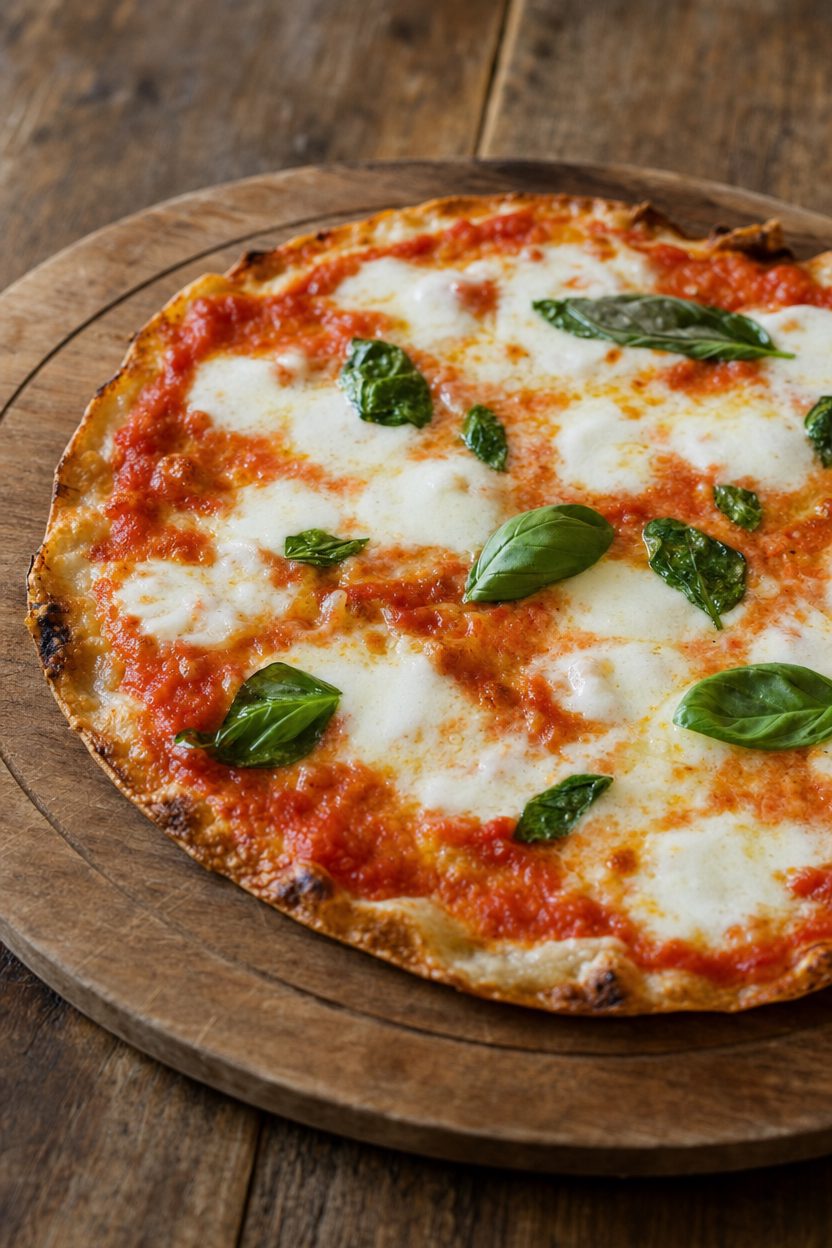
Roman pizza comes in two famous forms, and they are not made the same way. Pizza tonda romana is the thin, shatteringly crisp round — a low-hydration dough (around 55%, drier than Neapolitan) rolled thin for a cracker-like snap. Pizza in teglia / al taglio is the airy, high-hydration pan pizza sold by the slice. This calculator defaults to the high-hydration Roman style, which gives that open, bubbly crumb over a deeply crisp base.
High-hydration Roman dough runs 70–80% hydration — we default to 75% — with lighter 220g portions. The high water content makes the dough sticky, so a long, slow fermentation and gentle handling (stretch-and-folds rather than kneading) make it far easier to work with. For the drier tonda, simply dial the hydration down toward 55–60%.
For pizza tonda, roll thin and bake hot on a steel or stone until crisp. For teglia/al taglio, the dough is pressed into an oiled pan and baked until the bottom is deeply golden and crunchy. A cold ferment of 24–48 hours improves both flavour and the open, bubbly crumb.
Roman pizza dough FAQ
What hydration is best for Roman pizza dough?
It depends which Roman pizza. The airy al taglio / in teglia (pan) style is high-hydration at 70–80% — that's what this calculator defaults to (75%). The thin, cracker-crisp tonda romana is the opposite: low-hydration, around 55%, even drier than Neapolitan.
What's the difference between pizza tonda and al taglio?
Pizza tonda romana is a thin, low-hydration (~55%) crispy round — almost cracker-like. Pizza al taglio (or in teglia) is a high-hydration (70–80%) airy pan pizza baked in a tray and sold by the slice. Same city, very different doughs.
How do I handle such a wet Roman dough?
Use stretch-and-folds instead of kneading, keep your hands and surface lightly wet or floured, and give it a long, cool fermentation. Time does most of the work for you.
How heavy should a Roman dough ball be?
For a thin round, around 200–250g (we default to 220g). For pan pizza al taglio, weigh the dough to the tray size instead — roughly 0.5–0.6g per cm² of pan.